
- About the Author
- Chapter 1: What Is Class Struggle?
- Chapter 2: The Origin of Classes
- Chapter 3: The Development of the Working Class
- Chapter 4: The Role of the Bourgeoisie
- Chapter 5: Capitalism and Its Contradictions
- Chapter 6: The State and Class Rule
- Chapter 7: The Working Class and Political Power
- Chapter 8: The Transition to Socialism
- Chapter 9: The Dictatorship of the Proletariat
- Chapter 10: The Withering Away of the State
- Chapter 11: International Solidarity
- Chapter 12: The Future Society
About the Author
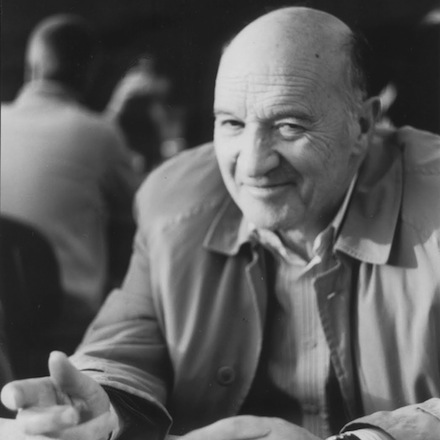
Domenico Losurdo (November 14, 1941 – June 28, 2018) was Professor of Philosophy at the University of Urbino. He was one of the most prominent left-wing intellectuals in Europe, known for his critical studies of liberalism, colonialism, and revisionist historiography. His works often revisit canonical thinkers (Hegel, Nietzsche, Heidegger) to question conventional narratives.
A Marxist deeply critical of Western liberalism’s contradictions (especially its entanglement with slavery, racism, and imperialism). Losurdo emphasized that liberal democracies often coexisted with oligarchic power structures and exclusionary practices. He defended historical Communist experiments from what he saw as superficial or hypocritical critiques. He critiqued Cold War historiography and anti-communist simplifications.
Chapter 1: What Is Class Struggle?
Class struggle emerges as the dynamic force propelling the development of human societies. At its root lies the division of people into groups distinguished by their connection to the means of production: those who own and control productive resources and those who must labor to survive. These groups confront one another not by accident but as a consequence of economic necessity and opposing material interests. From the earliest social formations, material conditions have set people in conflict, shaping the structure of societies and the course of history itself.
In early human communities, communal ownership and cooperative labor prevailed. As production advanced and surpluses began to accumulate, relations of equality dissolved. Some groups seized control of surplus wealth and means of subsistence, subordinating others to their will. This division established the first rudimentary classes and planted the seeds of antagonism that would intensify over centuries. Slavery arose as the most brutal form of exploitation, reducing human beings to property. Feudalism transformed bondage into serfdom, attaching peasants to land they did not own, and demanding tribute for the privilege to toil.
With each stage, the essence of class relations remained unchanged: a minority reaping the benefits of a majority’s labor. Under capitalism, this antagonism persists in a new form. Workers, dispossessed of any productive property, are compelled to sell their labor-power to survive. Capitalists purchase this labor and appropriate the surplus created in production. This exploitation is concealed beneath the surface of voluntary exchange, but the conflict between wage labor and capital is irreconcilable. Economic competition, the pursuit of profit, and the discipline of the market ensure that workers remain subordinate to owners.
Class struggle does not remain confined to economic life. It shapes institutions, laws, customs, and ideology itself. Every epoch’s prevailing ideas and values serve to justify existing relations of domination. The ruling class secures its position not only through coercion but by shaping perceptions of justice and normality. Religion, morality, and philosophy have often been adapted to lend legitimacy to exploitation and suppress resistance.
Yet class struggle is not static. As the productive forces develop, the balance of power can shift. The exploited acquire new tools, new forms of association, and greater awareness of their collective interests. They organize to challenge their oppressors, contesting control over production and the distribution of wealth. Periods of crisis and upheaval punctuate the long periods of relative stability, revealing the underlying conflicts that had been temporarily contained.
From slave revolts to peasant uprisings, from the early guild struggles to the mass workers’ movements of the modern age, class struggle has erupted whenever the demands of the oppressed collide with the privileges of the ruling few. Each struggle leaves behind lessons, traditions, and a legacy of resistance that shapes the consciousness of future generations.
In capitalism, the contradiction between social production and private appropriation intensifies the potential for conflict. While production requires the cooperation of millions, ownership remains concentrated in the hands of a few. As wealth and power become more centralized, the possibility of collective action grows. Workers can recognize their shared fate and the need to confront their exploiters as a class rather than as isolated individuals.
Class struggle, therefore, is both an outcome of material conditions and the engine of historical transformation. It explains why societies do not remain unchanged, why revolutions erupt, and why progress comes through conflict rather than consensus. Understanding class struggle provides a key to deciphering the forces that shape civilization, institutions, and human relationships themselves.
Key Points
- Class struggle arises from material conditions and conflicting interests over control of production.
- Historical forms of exploitation evolved from slavery to feudalism to capitalism, retaining core antagonisms.
- Ideologies and institutions serve to legitimize domination and suppress resistance.
- The development of production and collective organization increases the potential for conflict.
- Class struggle drives social change and determines the evolution of societies.
Chapter 2: The Origin of Classes
Human societies did not always contain classes or divisions based on ownership and exploitation. For most of prehistory, communities lived under conditions of primitive communism, where resources were shared collectively, and survival depended on cooperation rather than coercion. Production was oriented to meet immediate needs rather than accumulation, and social bonds were shaped by kinship and mutual aid. This early egalitarian mode persisted until advances in productive forces made it possible to generate a surplus beyond what was needed for subsistence.
Once surplus arose, the conditions were created for a fundamental transformation in social relations. Groups that managed to secure control over the surplus gradually established their dominance over others. Accumulated resources—tools, domesticated animals, stores of grain—became sources of power, enabling some individuals to rise above the rest. Property relations began to crystallize, and new hierarchies replaced the old communal bonds. The shift did not occur overnight but unfolded through long periods marked by conflict, adaptation, and institutional change.
As private property expanded, its defense demanded new forms of authority. To safeguard the emerging privileges of an owning minority, society developed coercive structures. The earliest states arose as instruments to protect property and enforce subordination. Chiefs, warrior castes, and religious elites played decisive roles in this transformation, claiming divine sanction or natural superiority as justification for their ascendancy. While these ideological claims varied across cultures, they served the same purpose: to make exploitation appear legitimate and inevitable.
With the formation of class society came the division between mental and manual labor. As certain groups freed themselves from direct productive work, they concentrated on administration, ritual, and the development of knowledge. Literacy and specialized skills became exclusive domains of a small elite, reinforcing the distance between rulers and the ruled. In parallel, the masses remained bound to land or compelled to serve, stripped of any claim to the wealth they produced.
Class divisions thus emerged not as the expression of innate human nature but as the consequence of material development and social organization. Once established, these divisions proved remarkably persistent. The structures of early civilizations—slavery in the ancient world, caste hierarchies in Asia, and tribute-based empires in the Americas—demonstrated the universality of the process by which surplus production begot inequality. Despite differences of culture and geography, the pattern repeated itself wherever human societies advanced beyond subsistence.
The origin of classes carried profound implications for human freedom and development. While the concentration of surplus allowed for monumental achievements in architecture, science, and culture, it also entailed subjugation and degradation. The contradiction between the potential for collective advancement and the reality of oppression defined the course of civilization. The capacity to produce abundance coexisted with entrenched systems of privilege, giving rise to the conflicts that would shape the destiny of societies for millennia.
Key Points
- Primitive communism was based on collective ownership and cooperative labor.
- Surplus production created the material basis for private property and class divisions.
- Early states and institutions emerged to protect property and enforce subordination.
- The division between mental and manual labor reinforced hierarchies.
- Class society arose from historical development, not human nature.
Chapter 3: The Development of the Working Class
The modern working class emerged with the rise of industrial capitalism, transforming not only the economic landscape but the very fabric of society. Mechanization and factory production supplanted artisanal labor and domestic manufacture, concentrating vast numbers of workers under a single roof. This process tore people away from traditional communities, severing ties to land and craft, and creating a new class dependent entirely on the sale of labor-power to survive.
As factories multiplied, labor became increasingly disciplined and uniform. Machines dictated the pace and character of work, reducing individual skill and initiative. The worker, once an autonomous producer, now performed fragmented, repetitive tasks at the command of an employer. This transformation inflicted profound hardships: long hours, meager wages, unsafe conditions, and the degradation of human dignity. Yet it also laid the groundwork for a collective identity rooted in shared exploitation.
The birth of the proletariat brought into being the material conditions for class consciousness. Isolated peasants and artisans might resist oppression in scattered and uncoordinated ways, but industrial workers gathered daily in common workplaces. There, they discovered their dependence on one another, their shared grievances, and the power of solidarity. Even the attempt by capitalists to divide workers—by sex, age, skill, or nationality—could not fully prevent this growing awareness.
Urbanization accelerated the process. The swelling cities became centers of labor, poverty, and resistance. Slums and tenements arose in the shadows of factories, while diseases and squalor accompanied rapid industrial growth. Workers saw firsthand the opulence of the bourgeoisie set against their own destitution. The spectacle of inequality and the daily struggle for survival forged a consciousness that no amount of moral exhortation alone could produce.
Efforts to improve conditions began with spontaneous protests and acts of defiance. Food riots, machine-breaking, and workplace sabotage reflected desperation as much as resistance. Over time, these scattered efforts evolved into more organized forms of struggle: trade unions, friendly societies, and mutual aid associations. Workers learned to negotiate, to strike, and to formulate demands collectively.
Beyond economic struggle, the proletariat gradually came to recognize its political potential. The fight for shorter hours and higher wages revealed the limits of bargaining within capitalism. Workers began to perceive the need for broader social change. As industrial capitalism matured, the contradictions it engendered became more visible, and the working class increasingly assumed a leading role in demanding a new social order.
The development of the working class was thus not merely a matter of numbers or economic function. It represented the formation of a collective actor capable of transforming society. The experience of exploitation and the discovery of solidarity endowed workers with an awareness of their historic mission: to abolish the system that created their misery and to inaugurate a society based on cooperation rather than profit.
Key Points
- Industrial capitalism created a new class of wage laborers dependent on selling their labor.
- Mechanization and factory work de-skilled workers and intensified exploitation.
- Shared conditions fostered solidarity and collective identity.
- Early resistance evolved into trade unions and organized movements.
- The proletariat developed a consciousness of its potential to transform society.
Chapter 4: The Role of the Bourgeoisie
The bourgeoisie emerged as a revolutionary force that overturned feudal structures and reshaped the world in its own image. With the growth of commerce, manufacturing, and financial capital, this rising class gradually eroded the power of the landed aristocracy. In city after city, it established its dominance through economic strength, cultural influence, and ultimately political revolution. The bourgeois revolutions of the seventeenth and eighteenth centuries swept away the remnants of feudal privilege and asserted the supremacy of private property and market relations.
This triumph brought tremendous advances in human productivity. Scientific discoveries, technological innovation, and the harnessing of natural forces all flourished under capitalist enterprise. New industries transformed not only methods of production but also transportation, communication, and everyday life. The bourgeoisie proclaimed liberty, equality, and fraternity, drawing millions into its vision of progress. Under its rule, capitalism became the most dynamic and expansive system the world had ever seen.
Yet the achievements of the bourgeoisie came at a profound human cost. Freed from feudal constraints, capitalist production unleashed a relentless drive for profit. Labor was reduced to a commodity to be purchased as cheaply as possible, and entire populations were subjected to exploitation. The wealth created by the working masses accumulated in the hands of a minority who justified their power as the reward for enterprise and risk. Poverty persisted and often deepened even as societies grew richer.
In the colonies and the periphery of the capitalist world, the bourgeoisie extended its reach through conquest, plunder, and subjugation. Markets were carved open by force, resources extracted without regard for indigenous populations, and entire cultures subordinated to the imperatives of profit. While the bourgeoisie celebrated civilization and enlightenment, its global expansion often relied on violence and oppression.
The contradictions inherent in bourgeois rule became more pronounced as capitalism developed. The concentration of capital led to monopolies and trusts that stifled competition—the very principle the bourgeoisie once championed. Economic crises erupted when the productive capacity of society outstripped the purchasing power of the masses. Periodic depressions revealed the irrationality of a system where abundance coexisted with want.
Despite its revolutionary origins, the bourgeoisie grew increasingly conservative, defending its privileges against any threat. It adapted state institutions to secure its domination, employing parliaments, bureaucracies, and armies as instruments of class rule. The rhetoric of freedom gradually gave way to the reality of coercion and manipulation. The same class that had once torn down feudal barriers now erected new obstacles to social progress.
The role of the bourgeoisie thus contains a profound paradox. It has driven humanity to unprecedented levels of productive power and scientific knowledge while entrenching new forms of inequality and alienation. Its revolutionary energy carried society out of feudal darkness but at the price of subordinating human life to the logic of capital. This dual legacy defines the contradictions that continue to shape the modern world.
Key Points
- The bourgeoisie overthrew feudalism and established capitalist production.
- Its triumph enabled technological and economic progress on a vast scale.
- Exploitation, inequality, and colonial conquest accompanied capitalist expansion.
- Monopolies and economic crises exposed capitalism’s internal contradictions.
- The bourgeoisie transformed from a revolutionary class into a conservative defender of privilege.
Chapter 5: Capitalism and Its Contradictions
Capitalism organizes production on an immense scale, harnessing the labor of millions to create a flood of commodities. Its power rests on private ownership of the means of production and the relentless pursuit of profit. Every enterprise is compelled to expand or be destroyed by competition, driving an unending process of accumulation and innovation. This dynamic grants capitalism extraordinary vitality but also makes it inherently unstable and crisis-prone.
At the core of its contradictions lies the conflict between social production and private appropriation. Factories, mines, and transport networks function through the cooperative labor of countless individuals, yet the surplus they produce is seized by owners. This arrangement generates an imbalance between the capacity to produce wealth and the ability of the population to consume it. Workers, whose labor creates value, are paid only enough to maintain their subsistence, while capitalists retain the surplus as profit.
This contradiction manifests in periodic crises of overproduction. Goods pile up unsold, not because society has no need for them, but because markets cannot absorb them profitably. Businesses fail, workers are cast into unemployment, and entire regions descend into poverty. These crises are not accidents or temporary disruptions but recurring features of capitalist development. They reveal the irrationality of a system in which abundance becomes a catastrophe.
The drive to reduce costs and maximize profits also fuels the concentration and centralization of capital. Small producers are steadily eliminated or absorbed by larger enterprises, and wealth becomes concentrated in fewer hands. Monopolies and trusts replace free competition with oligarchic control, undermining the ideals of equality and opportunity that capitalism once proclaimed. The power of finance capital grows, shaping economic life through credit, speculation, and manipulation of markets.
Technological progress, a hallmark of capitalism, intensifies these contradictions. New machinery and techniques increase productivity but displace workers and erode traditional industries. Entire communities are disrupted as capital moves in search of cheaper labor and higher returns. The working class finds itself subjected to perpetual insecurity, its gains constantly threatened by mechanization and relocation.
In the struggle for profit, human needs are subordinated to the demands of accumulation. Resources are wasted, environments are ravaged, and lives are sacrificed to the imperatives of competition. The very achievements of capitalism—its productive power, global reach, and technological prowess—turn into forces that deepen inequality and social dislocation.
Capitalism’s contradictions ultimately create the conditions for its transcendence. By bringing workers together in large-scale production, it generates the basis for collective action and consciousness. The crises it engenders expose its inability to fulfill the promise of prosperity and progress for all. From these conflicts arises the necessity—and the possibility—of a new social order grounded in cooperation and the rational organization of resources.
Key Points
- Capitalism unites social production with private appropriation, creating systemic imbalance.
- Overproduction crises recur because markets cannot absorb all commodities profitably.
- Concentration of capital produces monopolies and deepens inequality.
- Technological progress increases productivity but causes insecurity and dislocation.
- The contradictions of capitalism create conditions for its eventual replacement.
Chapter 6: The State and Class Rule
The state presents itself as the embodiment of the common good, an impartial guardian of order and justice. Yet beneath this appearance lies its true character as the instrument of class domination. From the moment societies divided into classes, the state emerged to defend the interests of the ruling minority against the oppressed majority. Its structures—laws, courts, police, armies—exist not to reconcile antagonistic interests but to secure the conditions necessary for exploitation.
In pre-capitalist societies, the state upheld feudal privileges and maintained the subordination of peasants and serfs. Kings and lords claimed divine right or ancient tradition as justification for their rule, while the state apparatus enforced tribute and obedience. With the rise of capitalism, the bourgeoisie transformed the state to serve its own purposes. New constitutions and representative institutions replaced feudal forms, but the essential function of state power remained unchanged: to protect property relations and suppress any challenge to them.
Under bourgeois rule, the legal system declares formal equality before the law. However, this equality conceals profound material inequalities. Laws governing contracts, property, and inheritance ensure that economic power translates into social and political power. The state intervenes to secure the conditions for capitalist accumulation, regulating labor relations, managing currency and credit, and deploying force when necessary to crush resistance.
The mechanisms of persuasion and coercion combine to maintain the existing order. Education, religion, and the media shape consciousness, cultivating respect for authority and acceptance of the status quo. When ideological control fails or proves insufficient, the state resorts to violence: troops deployed against strikes, police suppressing demonstrations, and prisons detaining those who defy the established hierarchy. Even in the most liberal democracies, these repressive functions remain at the core of state power.
The growth of capitalism also leads to an expansion of the state’s administrative machinery. Bureaucracies proliferate to manage the complex affairs of industrial society. While these institutions may appear neutral, they are permeated by the interests of the dominant class. Regulatory bodies, welfare programs, and public services are structured to preserve social stability and prevent challenges to property relations.
Imperialist expansion further demonstrates the state’s role in class rule. Colonies are conquered and governed not simply in the name of civilization but to secure markets, resources, and spheres of influence for capitalist interests. Armies and navies enforce this global domination, demonstrating that the coercive power of the state does not stop at national borders.
In essence, the state is a product of irreconcilable class conflict. Its existence reflects the inability of society to regulate itself through voluntary cooperation. As long as class divisions persist, the state remains indispensable to the maintenance of exploitation and inequality. Only with the abolition of classes can the state’s coercive functions be rendered obsolete.
Key Points
- The state arises to protect the interests of the ruling class in all class societies.
- Under capitalism, the state secures property relations and suppresses resistance.
- Formal legal equality conceals material inequality and entrenches exploitation.
- Ideological control and coercive force combine to maintain bourgeois rule.
- The state’s existence reflects irreconcilable class conflict and will persist until class divisions end.
Chapter 7: The Working Class and Political Power
The working class confronts exploitation not only in the factory but in every sphere of life governed by capitalist relations. Its struggles begin with economic resistance—strikes for higher wages, protests against intolerable conditions, efforts to secure shorter hours. These battles are essential for survival and for building collective confidence. Yet no matter how persistent or militant, economic struggles alone cannot break the power of the bourgeoisie. As long as ownership of the means of production remains intact, capital retains the upper hand.
Recognition of this limitation leads workers to the realm of politics. The fight for reforms—better labor laws, universal suffrage, social protections—becomes a crucial stage in the development of class consciousness. Through these campaigns, workers learn the real character of the state and the interests it defends. They discover that even the most democratic institutions are shaped by the logic of property, and that concessions are granted only under pressure.
Trade unions and economic organizations, while indispensable, cannot substitute for political organization. Their scope remains confined to the workplace and to bargaining within the existing system. To confront the capitalist class as a whole, the working class must build its own political party—an organization capable of uniting diverse struggles, formulating a shared vision, and waging an independent fight for power. The formation of such parties reflects the maturing understanding that only political action can transform society.
Participation in electoral processes offers opportunities to agitate, expose the contradictions of capitalism, and advance demands that reflect workers’ interests. However, the struggle must not be reduced to the pursuit of parliamentary seats. Without an organized force anchored in the workplaces and communities, electoral success becomes empty symbolism. Political engagement must be rooted in the mass movement of the proletariat itself.
Reform and revolution are often presented as opposing strategies. In practice, the distinction lies in whether efforts to improve conditions are connected to the goal of ending capitalist exploitation. Reforms won through struggle can strengthen workers’ capacity to resist and organize. Yet they remain vulnerable to reversal unless embedded in a broader project to challenge the power of capital.
The working class faces constant attempts by the ruling class to co-opt, divide, and demoralize it. Nationalism, racism, and sectional rivalries are cultivated to fracture solidarity. Leaders who once claimed to speak for workers can be seduced by the privileges of the system they oppose. Vigilance and political clarity are required to resist these pressures and to maintain an independent course.
The conquest of political power is not an abstract ideal but a practical necessity. Only by dismantling the institutions that uphold capitalist rule can the working class lay the foundations of a new social order. The capacity to achieve this depends on the degree to which workers are organized, conscious of their interests, and prepared to act collectively. Political power is the lever by which the proletariat can abolish exploitation and transform society.
Key Points
- Economic struggles alone cannot end capitalist exploitation.
- Political organization is essential for confronting the power of the bourgeoisie.
- Trade unions must be complemented by an independent working-class party.
- Reforms can strengthen the movement but must be linked to revolutionary goals.
- The conquest of political power is necessary to abolish class rule and build a new society.
Chapter 8: The Transition to Socialism
The overthrow of capitalist society requires more than isolated acts of rebellion; it demands a conscious, organized, and sustained effort by the working class to seize control of production and transform social relations. This transition begins with the recognition that the existing institutions cannot be adapted to serve the interests of labor. The machinery of the bourgeois state, built to defend private property, must be dismantled and replaced by new structures capable of expressing the collective will of the producers.
Revolutionary change emerges not merely from moral outrage but from the contradictions inherent in capitalism itself. As crises deepen and the gap between wealth and poverty widens, growing sections of the working class and oppressed are drawn into struggle. The experience of exploitation, insecurity, and humiliation becomes the catalyst for political awakening. Movements that begin with modest demands can escalate rapidly when repression exposes the true character of the state.
The transition to socialism requires clarity of purpose and unity of action. Spontaneous uprisings can ignite the process, but only disciplined organization can sustain it. The working class must forge institutions of its own—councils, assemblies, and other forms of direct representation—to coordinate struggle and lay the basis for new social relations. These bodies become the embryonic organs of workers’ power, challenging the legitimacy of capitalist authority.
Seizing state power does not mean simply replacing one set of rulers with another. It entails the expropriation of the means of production from the capitalist class and their conversion into collective property. Factories, land, banks, and infrastructure must be administered democratically to meet social needs rather than private profit. Economic planning replaces the anarchy of the market, enabling resources to be directed rationally and equitably.
The transition is bound to encounter fierce resistance. The dispossessed bourgeoisie, accustomed to dominance, will not relinquish its privileges without a struggle. Counter-revolutionary forces—both domestic and foreign—will attempt to sabotage, isolate, and overthrow the new order. The working class must therefore be prepared to defend its gains with determination and vigilance. Without this readiness, any revolution remains vulnerable to reversal.
While the challenges are immense, the potential of socialism lies in the liberation of human energies long shackled by exploitation and competition. Once production is oriented toward collective well-being, the artificial scarcity and degradation of capitalism can be overcome. Freed from the compulsion to labor for survival, people can develop their capacities, pursue knowledge, and cultivate solidarity.
The transition to socialism is not an abstract ideal but a concrete historical necessity arising from the contradictions of capitalist society. It represents the conscious choice to replace a system based on profit and domination with one grounded in cooperation, equality, and human development.
Key Points
- The transition to socialism requires dismantling the bourgeois state and building new institutions of workers’ power.
- Crises and exploitation generate conditions for revolutionary change.
- Expropriation of the means of production enables democratic planning for social needs.
- The bourgeoisie will resist fiercely, demanding organized defense of the revolution.
- Socialism liberates human potential by abolishing exploitation and competition.
Chapter 9: The Dictatorship of the Proletariat
The victory of the working class in seizing political power does not immediately abolish the remnants of the old society. The former ruling class, dispossessed of its economic privileges, retains vast networks of influence, resources, and ideological footholds. In this context, the dictatorship of the proletariat emerges as the necessary form of state power to defend the revolution, suppress counter-revolutionary forces, and complete the transformation of social relations.
This dictatorship does not signify the rule of a single individual or an arbitrary tyranny. Rather, it represents the organized power of the working majority exercised over the minority that seeks to restore capitalist domination. Its purpose is not indefinite repression but the dismantling of institutions and practices that sustain exploitation. Through this transitional state, the proletariat consolidates its achievements, secures control of production, and lays the groundwork for classless society.
Economic reconstruction stands at the center of this process. The collectivization of the means of production must be accompanied by measures to democratize administration and involve the masses directly in decision-making. Production plans, distribution systems, and social services are developed to eliminate scarcity and privilege. These efforts foster solidarity and confidence, weakening the social base of counter-revolution.
The dictatorship of the proletariat also confronts sabotage and resistance from former elites. Attempts to organize insurrection, disrupt supply lines, or foment civil war must be met with firm action. At the same time, efforts are made to win over wavering elements, demonstrating in practice the superiority of collective organization over capitalist chaos. The new power cannot afford illusions about the determination of the dispossessed class to reclaim its dominance.
Democracy assumes a different character under proletarian rule. Instead of formal equality masking material inequality, genuine participation by working people becomes possible. Councils, assemblies, and committees become the foundation of governance, enabling producers to exercise direct control over social affairs. The apparatus of coercion remains, but it is subordinated to the interests of the majority rather than the preservation of privilege.
The dictatorship of the proletariat is a transitional phase, not an end in itself. Its necessity arises from the persistence of class antagonisms and the threat of counter-revolution. As the material basis of exploitation is dismantled and new forms of solidarity take root, the coercive functions of the state begin to lose their purpose. The withering away of the state becomes possible only when these conditions mature.
The experience of past revolutions reveals both the difficulties and the possibilities inherent in this stage. Without vigilant defense, gains can be reversed. Without the widest participation, bureaucracy can arise. Consciousness, discipline, and collective initiative are indispensable for navigating this critical period and ensuring that the dictatorship of the proletariat remains the instrument of emancipation rather than oppression.
Key Points
- The dictatorship of the proletariat is the organized power of the working class over the former ruling class.
- It defends the revolution and completes the transformation of social relations.
- Economic reconstruction and democratization are central tasks.
- Counter-revolutionary resistance must be firmly opposed.
- This transitional state prepares the conditions for the withering away of all class rule.
Chapter 10: The Withering Away of the State
The state, throughout history, has existed to enforce the dominance of one class over another. Its courts, laws, prisons, and armed forces have always rested on the need to maintain exploitation and secure the privileges of the ruling minority. Even the dictatorship of the proletariat, despite its fundamentally different purpose, remains a state in this sense: an apparatus of coercion arising from class antagonism. Yet as the material foundations of class divisions are dismantled, the necessity of the state begins to decline.
The withering away of the state does not occur through a sudden act or decree. It unfolds gradually as economic and social transformations eliminate the conditions that give rise to class conflict. As collective ownership becomes universal and production is organized according to need, the compulsion to compete and dominate recedes. Old habits of command and submission, instilled by centuries of oppression, are replaced by new relationships grounded in cooperation and shared responsibility.
This process depends on the active participation and self-government of the producers themselves. Councils and assemblies, which first emerge as instruments of revolutionary power, evolve into institutions of free association. Coercive functions lose their purpose when all members of society have access to resources and decision-making power. The distinction between rulers and ruled dissolves, and the state as an instrument of class rule becomes obsolete.
Cultural transformation accompanies economic change. Education and social life cease to reproduce the prejudices and hierarchies of the past. The barriers erected by nationality, gender, and ethnicity weaken as people engage in common endeavors. Freed from the insecurity and competition that breed hostility, human relationships acquire a spirit of solidarity and mutual respect. In this environment, the need for laws backed by force diminishes.
The withering away of the state is inseparable from the abolition of classes themselves. As long as remnants of private ownership or privilege persist, the state remains necessary to protect collective gains and guard against attempts to restore exploitation. Only when the last vestiges of class society are overcome can the state relinquish its coercive character entirely.
This prospect has often been dismissed as utopian. Yet it arises not from abstract speculation but from the logic of social development. If class antagonisms are not overcome, society remains trapped in cycles of oppression and revolt. If they are transcended, the state loses its historical purpose and gradually disappears.
The final aim of socialism is thus not the construction of a new apparatus of domination but the creation of a self-governing community. In such a society, the administration of people gives way to the administration of things, and public affairs become the responsibility of all. The withering away of the state signifies the culmination of the struggle for human emancipation.
Key Points
- The state arises from and exists to enforce class rule.
- As collective ownership and equality spread, the necessity of coercion diminishes.
- Self-government replaces imposed authority as class divisions disappear.
- Cultural transformation is essential to overcome inherited hierarchies.
- The withering away of the state marks the achievement of true emancipation.
Chapter 11: International Solidarity
The struggle of the working class does not confine itself to the borders of any single nation. Capitalism itself is a global system, driven by the ceaseless search for markets, resources, and cheap labor. Its crises and conflicts extend across continents, binding the fate of workers everywhere into a shared destiny. In this reality, international solidarity emerges not as a moral aspiration but as an urgent practical necessity.
Workers of different countries face varied conditions and forms of oppression, yet the fundamental contradiction remains the same: the exploitation of labor by capital. Attempts by the ruling classes to pit workers against one another—through nationalism, racism, or imperial rivalry—have always been essential tools of domination. By sowing division, the bourgeoisie weakens resistance and channels discontent into destructive channels.
The history of labor movements contains inspiring examples of international cooperation. From early efforts to coordinate strikes across borders to the formation of international workers’ associations, these initiatives demonstrated the power of solidarity to transcend language, nationality, and culture. Mutual aid, shared strategy, and coordinated action have proven vital in moments of crisis and repression.
Imperialism intensifies the imperative for internationalism. In the colonies and semi-colonies, capitalist powers impose exploitation by force, extracting wealth and imposing social structures that serve metropolitan interests. The emancipation of the working class in industrial countries remains incomplete as long as oppression persists elsewhere. Solidarity with colonial peoples is not charity but a recognition that the liberation of all is bound together.
Revolutionary movements have shown that internationalism can become a decisive factor in the struggle against capitalism. When workers in one country rise up, the ruling classes of others often intervene to crush the example. Only coordinated action across borders can counter this threat and ensure that no revolution stands alone and isolated. International solidarity must therefore be woven into the daily practice and strategic orientation of the working class.
This solidarity takes many forms: support for struggles abroad, resistance to imperialist wars, and cooperation in building organizations that span nations. It also demands the rejection of chauvinism and the recognition of the equal dignity and rights of all peoples. Without this foundation, any talk of socialism becomes hollow, and the victories of one section of the proletariat remain precarious.
International solidarity embodies the understanding that the working class is a single class in relation to capital, regardless of borders. Its triumph requires a movement as global as the system it seeks to replace. Only through unity across nations can the forces of exploitation be defeated and the possibility of a truly cooperative society realized.
Key Points
- Capitalism is a global system that makes international solidarity essential.
- Nationalism and racism are used to divide workers and weaken resistance.
- Historical examples show the power of cross-border cooperation and mutual aid.
- Imperialism ties the liberation of workers to the emancipation of colonial peoples.
- A global movement is necessary to defeat capitalism and build socialism.
Chapter 12: The Future Society
The possibility of a society free from exploitation, oppression, and scarcity has long inspired visions of human liberation. This future society does not arise from the imagination alone but from the material development of production and the capacities already latent within capitalism. Once freed from the constraints of private ownership and profit, these capacities can be harnessed to meet the needs and aspirations of all.
At the heart of this new order lies the social ownership of the means of production. Factories, farms, and infrastructure become the collective property of the community, administered democratically. Production is no longer guided by the blind pursuit of profit but by conscious planning to ensure abundance, sustainability, and the flourishing of every individual. The antagonism between labor and capital disappears as producers collectively decide the aims and methods of their work.
Work itself undergoes a profound transformation. No longer an oppressive burden or a means of survival imposed by necessity, labor becomes a sphere of creative self-expression and solidarity. Shorter hours, advanced technology, and equitable distribution allow all to participate in shaping social life while enjoying the fruits of collective labor. The artificial scarcity that condemns millions to poverty is abolished, replaced by a rational use of resources for the common good.
Inequality rooted in class divisions gives way to genuine human equality. Distinctions of wealth and privilege no longer determine life chances or social standing. Education, culture, and health cease to be commodities and become universal rights. People can develop their talents without fear of deprivation or humiliation. The liberation of women, the dismantling of racial hierarchies, and the respect for diverse identities become essential principles of the new society.
Democracy acquires its fullest meaning. Not limited to periodic elections or formal rights, it becomes the direct participation of all in managing collective affairs. Councils, assemblies, and cooperative associations replace bureaucratic hierarchies. Decision-making is grounded in transparency, accountability, and the active involvement of the whole community.
The relationship between humanity and nature is transformed. Production, guided by social need rather than profit, can be organized sustainably, preserving the planet for future generations. The reckless waste and destruction of the capitalist epoch give way to stewardship and respect for the natural world as the common heritage of all.
This vision is not a utopia in the sense of a perfect, unchanging order. It remains subject to contradictions, errors, and challenges. Yet it offers a framework in which the historical potential of humanity can finally be realized. Freed from the compulsions of exploitation, people can build a society based on cooperation, solidarity, and the full development of human capacities.
Key Points
- The future society is based on collective ownership and democratic planning.
- Work becomes a realm of creativity and self-expression rather than compulsion.
- Inequality and privilege are abolished, enabling genuine human development.
- Democracy is expanded into all spheres of life through direct participation.
- Production is organized sustainably, respecting the environment as a shared heritage.