
- About the Author
- Chapter 1 – The Fight for the Vote: A Tortuous and Still-Unfinished History
- Chapter 2 – A New Tutor for the ‘Childlike’ Multitude
- Chapter 3 – An Alternative to Property Qualifications: The Origins of Bonapartism, from America to France
- Chapter 4 – The Trumpets of the Ruling Classes and the Bells of the Subaltern
- Chapter 5 – The Bonapartist Regime’s Baptism of Fire
- Chapter 6 – Universal Suffrage, Proportional Representation and the Protection of Minorities
- Chapter 7 – Bonapartism as the Nemesis of Democracy
About the Author
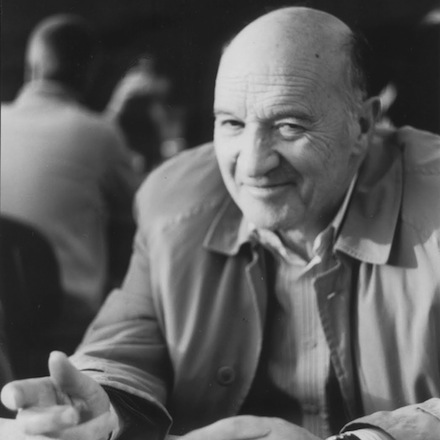
Domenico Losurdo (November 14, 1941 – June 28, 2018) was Professor of Philosophy at the University of Urbino. He was one of the most prominent left-wing intellectuals in Europe, known for his critical studies of liberalism, colonialism, and revisionist historiography. His works often revisit canonical thinkers (Hegel, Nietzsche, Heidegger) to question conventional narratives.
A Marxist deeply critical of Western liberalism’s contradictions (especially its entanglement with slavery, racism, and imperialism). Losurdo emphasized that liberal democracies often coexisted with oligarchic power structures and exclusionary practices. He defended historical Communist experiments from what he saw as superficial or hypocritical critiques. He critiqued Cold War historiography and anti-communist simplifications.
Chapter 1 – The Fight for the Vote: A Tortuous and Still-Unfinished History
Losurdo begins by framing the struggle for universal suffrage as an arduous and incomplete historical process. He emphasizes that the right to vote has never been a simple, automatic extension of modernity, but rather the product of intense, often violent conflict. In contrast to triumphalist liberal narratives that depict democracy as the inevitable unfolding of enlightened principles, he insists that the expansion of suffrage was repeatedly resisted by entrenched elites determined to maintain property qualifications and other restrictions.
The chapter opens by examining how, even after the American and French Revolutions, the majority of the population was systematically excluded from political participation. Losurdo shows how the American Republic restricted voting rights to white male property holders. In France, the Revolution abolished many privileges but quickly recoiled into systems of restricted franchise, particularly after the Thermidorian Reaction and the rise of Napoleon Bonaparte. In both contexts, property-based exclusions were defended as necessary safeguards against “the uneducated masses,” revealing a profound contradiction between proclaimed universal ideals and actual social practice.
He then moves into a comparative analysis of Europe. In Britain, the right to vote advanced only through protracted struggles, including the Chartist movement and repeated petitions that were frequently rejected by Parliament. Even the celebrated Reform Acts of the nineteenth century were partial concessions designed to blunt more radical demands. Losurdo highlights that each expansion of suffrage in Britain was accompanied by discourses portraying the working class as childish, irrational, or susceptible to demagoguery—tropes that would recur whenever elites sought to limit political participation.
Turning to Germany, Losurdo discusses how Prussia’s three-class voting system institutionalized massive inequality, granting disproportionate power to large property owners and industrial magnates. This arrangement was portrayed as rational and stabilizing, reinforcing the idea that democracy must be “tempered” by elite control. He notes how similar arguments were echoed in debates over suffrage in Italy and Spain, showing that fears of the “dangerous classes” transcended national boundaries.
He devotes a section to the United States’ persistent disenfranchisement of Black Americans, especially after the end of Reconstruction. While the Fifteenth Amendment formally guaranteed the vote regardless of race, the reality was systematic voter suppression through literacy tests, poll taxes, and terror tactics. Losurdo argues that these practices were not accidental deviations but essential features of a social order unwilling to tolerate the empowerment of freed slaves.
The chapter closes by reflecting on the paradox that even as universal suffrage has gradually been extended, mechanisms to neutralize it have also proliferated. Gerrymandering, campaign financing, voter suppression laws, and plebiscitary manipulation (where a strong leader claims to embody the popular will) are all strategies by which elites have learned to domesticate democracy. Losurdo warns that this tension is not a relic of the past but a defining characteristic of modern political life.
Key Points from Chapter 1
- The fight for suffrage was never linear or inevitable; it required constant struggle against elite resistance.
- Property qualifications and racial exclusions persisted long after revolutionary declarations of equality.
- Britain, Germany, and the United States each developed unique but parallel strategies to restrict the vote.
- Fears of the “irrational masses” justified paternalistic and exclusionary institutions.
- Even where universal suffrage triumphed formally, structural mechanisms emerged to dilute its impact.
- Democracy remains vulnerable to manipulation and reconfiguration into forms of controlled consent.
Chapter 2 – A New Tutor for the ‘Childlike’ Multitude
In this chapter, Losurdo delves deeper into the ideological justifications that accompanied the expansion of suffrage. He shows how the ruling classes, though forced to concede formal voting rights, simultaneously developed new discourses to frame the masses as inherently immature, irrational, and in need of guidance—what he calls the ideology of the “tutored democracy.”
The chapter opens with an exploration of liberal political thought in the nineteenth century, particularly the writings of figures such as Alexis de Tocqueville and John Stuart Mill. While these thinkers endorsed extending the franchise in principle, they also insisted that the lower classes were not fully capable of independent judgment. Tocqueville, for example, feared the “tyranny of the majority” and warned of the dangers posed by popular passions untethered from elite moderation. Mill, though a reformer, suggested that the educated should enjoy plural voting to balance the “childlike” impulses of the masses.
Losurdo underscores that such arguments were not marginal but formed a widespread consensus among European and American elites. Even progressive politicians and intellectuals maintained that the working class required tutelage. This was not only an abstract philosophical position but a practical strategy: it justified a host of institutional arrangements—weighted voting, indirect elections, and appointed second chambers—to counterbalance direct democracy.
He then traces how these ideas permeated popular culture and the press. Newspapers, novels, and political speeches regularly depicted workers and peasants as easily swayed by demagogues or as too ignorant to understand their own interests. Losurdo provides examples of polemics that described universal suffrage as a perilous experiment, akin to handing firearms to children. Such imagery reinforced paternalistic attitudes while naturalizing class hierarchies.
The chapter moves to discuss the emergence of mass political parties in this context. Even as suffrage expanded, parties claiming to represent the people often became vehicles for the same “tutoring” mission. Losurdo illustrates how liberal and conservative parties alike relied on patronage networks, symbolic appeals, and top-down leadership to channel and contain popular energies. In particular, he focuses on the role of charismatic leaders, who claimed to interpret the true will of the people but, in practice, monopolized political initiative.
He devotes considerable attention to the development of plebiscitary techniques. The referenda and popular consultations under Napoleon III, for instance, are analyzed as examples of how “direct democracy” could be used to ratify authoritarian power. In this system, the electorate was offered a stark choice—accept the ruler’s proposal or be cast as enemies of order. Losurdo emphasizes that such practices anticipated later forms of Bonapartism, where universal suffrage became an instrument for manufacturing consent rather than genuine deliberation.
In closing, Losurdo reflects on the enduring legacy of this tradition. The idea that the masses must be guided by a more enlightened elite did not disappear with the decline of classical liberalism. On the contrary, it was incorporated into new forms of managerial and technocratic governance, as well as populist movements that claim to bypass institutions in the name of the people but ultimately concentrate power in the hands of a single figure or clique.
Key Points from Chapter 2
- The expansion of suffrage was accompanied by ideological frameworks that portrayed the masses as childish and in need of tutelage.
- Prominent liberal thinkers like Tocqueville and Mill provided intellectual justifications for paternalistic controls.
- Institutional designs such as weighted voting and indirect elections were intended to limit the democratic impulse.
- Mass parties and charismatic leaders became tools to channel and neutralize popular participation.
- Plebiscitary practices—especially under Napoleon III—demonstrated how universal suffrage could be manipulated to legitimize authoritarian regimes.
- The trope of the “childlike multitude” persists in modern managerial and populist politics.
Chapter 3 – An Alternative to Property Qualifications: The Origins of Bonapartism, from America to France
Losurdo opens this chapter by exploring how Bonapartism emerged as a political solution to the contradictions of universal suffrage. He argues that while property qualifications had previously restricted voting to the propertied classes, Bonapartism offered an alternative: maintaining elite rule not by exclusion, but by organizing mass consent around charismatic leadership and plebiscitary mechanisms.
He begins with the American context. Losurdo notes that in the early United States, as property requirements were gradually dismantled, there was an anxious search among elites for new ways to contain popular sovereignty. The presidency of Andrew Jackson is presented as an early example of a plebiscitary model, where a powerful leader claimed a direct mandate from the people and used that legitimacy to consolidate authority. Though Jackson’s policies included significant democratizing measures, Losurdo insists that the style of leadership—personalized, anti-institutional, and reliant on appeals to the masses—prefigured later Bonapartist forms.
Next, he turns to France. The rise of Louis-Napoléon Bonaparte (Napoleon III) is depicted as the archetype of Bonapartism. In 1848, universal male suffrage was introduced as part of the Second Republic. But within four years, it was transformed into an instrument for establishing authoritarian rule. Losurdo details how Napoleon III used the plebiscite of December 1851—ostensibly a referendum on constitutional reform—to secure overwhelming approval for a coup d’état.
He underscores that Bonapartism did not suppress the principle of popular sovereignty; it redefined it. Elections and referenda became ritual affirmations of a predetermined order rather than spaces for authentic contestation. Losurdo emphasizes that this was an innovation of enormous historical significance: a model where universal suffrage was not only compatible with dictatorship but became its essential foundation.
The chapter then examines the ideological underpinnings of this transformation. The Bonapartist narrative portrayed the leader as the true embodiment of national unity, above the petty quarrels of parties and parliaments. The people were cast as a single, homogenous body whose will could be directly interpreted by the ruler. In this scheme, intermediary institutions—legislatures, independent courts, the press—were depicted as obstructive relics of the past.
Losurdo argues that this conception of democracy as plebiscitary acclamation was extraordinarily resilient. It reappeared in multiple guises throughout modern history, from Bismarck’s Germany to twentieth-century fascist movements. What unified these phenomena was the insistence that the people’s sovereignty could be expressed more purely by direct identification with a charismatic leader than through institutional pluralism.
The chapter closes with a warning. Bonapartism, Losurdo argues, represents a seductive alternative to parliamentary democracy because it promises order and simplicity. It appeals to those disillusioned by the complexities and compromises of representative institutions. But beneath this promise lies the essential dynamic: the construction of a passive citizenry whose only role is to confirm decisions already made in their name.
Key Points from Chapter 3
- Bonapartism emerged as a new form of elite domination adapted to universal suffrage.
- The American experience of personalized presidential power anticipated some Bonapartist techniques.
- Napoleon III perfected the model of plebiscitary rule through referenda and direct appeals to the electorate.
- Bonapartism retained the language of popular sovereignty while hollowing out genuine democratic contestation.
- The leader was portrayed as the sole authentic interpreter of the people’s will.
- This model would influence later authoritarian regimes and remains an enduring temptation for political systems facing crisis.
Chapter 4 – The Trumpets of the Ruling Classes and the Bells of the Subaltern
Losurdo begins this chapter by observing that Bonapartism was never merely a matter of institutional engineering or plebiscitary ritual. It was also sustained by powerful ideological currents and cultural practices designed to win over broad segments of society. To understand how this worked, he examines the contrasting ways the ruling classes and the popular classes communicated and mobilized support—what he metaphorically calls the “trumpets” of the elites and the “bells” of the subaltern.
The “trumpets” refer to the formidable apparatus of propaganda and symbolic representation that Bonapartist regimes deployed. Louis-Napoleon carefully crafted a mythology around his uncle’s imperial legacy, presenting himself as the guarantor of national greatness, stability, and prosperity. Public spectacles, monuments, mass rallies, and the controlled press all contributed to the aura of legitimacy. Losurdo emphasizes that these techniques created a form of political theater in which citizens were made to feel both included and awed, confirming the leader’s unique role as the embodiment of the people’s will.
He also describes how Bonapartism skillfully exploited fear: fear of revolution, fear of social upheaval, and fear of foreign enemies. These anxieties were cultivated to justify the suspension of parliamentary life and the concentration of power in a single executive. The ruling classes, even those initially skeptical of Bonaparte’s populist rhetoric, came to see the regime as the lesser evil compared to the specter of socialist revolution.
In contrast, Losurdo turns to the “bells” of the subaltern—the strategies the working class and other marginalized groups developed to resist and contest the Bonapartist order. He recounts how clandestine publications, workers’ societies, and local assemblies worked to preserve spaces of independent political culture. Although these counterpublics were often fragmented and beset by repression, they maintained alternative narratives that challenged the regime’s monopolization of popular legitimacy.
He provides examples of resistance in France during the Second Empire, including strikes, demonstrations, and the slow reconstruction of republican organizations. Losurdo also points out that Bonapartism never fully succeeded in extinguishing dissent, which periodically resurfaced in moments of crisis, especially during military defeats or economic downturns.
The chapter highlights the ambivalence of many intermediate strata—small property holders, artisans, provincial notables—who oscillated between support and suspicion of the Bonapartist regime. Losurdo argues that this ambivalence was not accidental. Bonapartism deliberately presented itself as a reconciliatory force, bridging the gap between the upper and lower classes. This political synthesis was sustained by promises of material benefits, nationalist appeals, and the constant invocation of order against chaos.
Losurdo closes by noting that the Bonapartist repertoire—the combination of spectacle, fear, economic concessions, and claims to embody the general will—would prove highly adaptable. It offered a template for later regimes that sought to manage mass politics without surrendering elite power, including the fascist movements of the twentieth century.
Key Points from Chapter 4
- Bonapartism was underpinned by an elaborate ideological apparatus—the “trumpets” of the ruling classes—which combined spectacle, propaganda, and fear.
- Louis-Napoleon portrayed himself as the heir of imperial glory and the savior of the nation.
- The regime’s power rested on both co-optation and repression of subaltern resistance.
- Working-class movements developed clandestine strategies to preserve independent political culture.
- Intermediate social strata were deliberately courted through promises of stability and material improvement.
- Bonapartism’s methods of integrating and neutralizing mass politics provided a model for later authoritarian experiments.
Chapter 5 – The Bonapartist Regime’s Baptism of Fire
Losurdo begins this chapter by stressing that no political regime can be understood apart from its relationship to war. For Bonapartism, military conflict was not just an accident of history but a central mechanism for consolidating power, projecting legitimacy, and disciplining society. He calls this the “baptism of fire,” the moment when the Bonapartist state’s internal dynamics fused with the external demands of imperial expansion.
The chapter opens with a detailed analysis of the Crimean War (1853–1856), in which Napoleon III committed France to an alliance with Britain and the Ottoman Empire against Russia. Losurdo emphasizes how this war served multiple purposes for the regime. Domestically, it diverted attention from political repression and economic grievances by uniting the nation around a patriotic cause. Internationally, it allowed Napoleon III to position himself as the arbiter of European balance, bolstering his prestige.
He describes how the regime deployed propaganda to cast the war as a civilizational struggle, portraying France as the champion of progress and liberty against Russian despotism. Losurdo notes the irony that this narrative was used by an authoritarian regime that had extinguished domestic republican institutions. He argues that such paradoxes were intrinsic to Bonapartism: the system needed grand external missions to sustain its internal authority.
After the Crimean conflict, the regime embarked on further imperial adventures, notably in Italy. Napoleon III’s intervention in the Second Italian War of Independence (1859) aimed to weaken Austria and support the cause of Italian unification under the House of Savoy. Here again, Losurdo sees a dual strategy: consolidating the Emperor’s popularity at home while expanding France’s influence abroad.
Yet these military campaigns came with costs. Losurdo details how the burdens of taxation, conscription, and casualties gradually eroded support among sectors of the population. He describes the contradictory effects: military glory fostered loyalty among some strata, especially those who benefited economically, but also sowed disillusionment among workers and peasants.
The chapter then shifts focus to the Mexican expedition (1861–1867), a disastrous attempt to establish a puppet monarchy under Maximilian of Habsburg. Losurdo argues that this adventure laid bare the structural weaknesses of Bonapartism: overreach, reliance on illusionary prestige, and a chronic underestimation of popular resistance in occupied territories. The Mexican fiasco contributed significantly to the slow unraveling of Napoleon III’s domestic authority.
Throughout, Losurdo highlights that Bonapartist warfare was never only about conquest—it was about performing power. Military triumphs were orchestrated spectacles that reinforced the myth of the leader as providential savior. But as the failures accumulated, the very instrument of legitimacy became a source of vulnerability.
The chapter concludes by reflecting on the fatal consequences of this dynamic. The regime’s dependence on external success created an unsustainable cycle of intervention and overextension, ultimately culminating in the catastrophic defeat in the Franco-Prussian War.
Key Points from Chapter 5
- War was integral to Bonapartism’s political logic, providing both legitimacy and distraction.
- The Crimean War and the Italian campaigns strengthened Napoleon III’s prestige while suppressing domestic dissent.
- The Mexican expedition exposed the regime’s limitations and eroded support.
- Bonapartist military adventures fused spectacle and coercion in a strategy of domination.
- The reliance on continual external victories was unsustainable and ultimately self-defeating.
- The cycle of war and overreach set the stage for the Franco-Prussian catastrophe that destroyed the regime.
Chapter 6 – Universal Suffrage, Proportional Representation and the Protection of Minorities
Losurdo opens this chapter by noting that the collapse of Bonapartism after the Franco-Prussian War forced Europe to reconsider the relationship between universal suffrage and authoritarian rule. He argues that while the defeat discredited Louis-Napoleon’s plebiscitary dictatorship, it did not resolve the deeper question: how could mass electoral participation coexist with genuine protections for pluralism and minority rights?
The chapter begins by recounting debates in post-1870 France. After the fall of the Second Empire, the Third Republic maintained universal male suffrage but sought to create institutional safeguards against the re-emergence of charismatic autocracy. Losurdo describes the design of parliamentary institutions, the strengthening of civil liberties, and the development of a multi-party system as deliberate counterweights to Bonapartist centralization.
He then moves to Germany. The newly unified German Empire established the Reichstag, elected by universal male suffrage. Yet, as Losurdo emphasizes, this was combined with an authoritarian executive controlled by the Kaiser and Chancellor Bismarck. The German model showed that universal suffrage alone did not guarantee democratic outcomes. Bismarck, like Napoleon III, cultivated a populist appeal while governing through decree and repression.
From there, Losurdo broadens his scope to examine how different countries experimented with electoral systems to avoid Bonapartist concentration of power. One solution was proportional representation. He devotes significant attention to the origins and diffusion of proportional systems, particularly in Belgium and parts of Germany. Proponents argued that proportional representation could prevent the artificial majorities and simplified plebiscites that allowed leaders to claim a monolithic popular mandate.
Losurdo explains how proportional representation was designed not only to reflect the diversity of opinion but to protect political minorities from being crushed by winner-takes-all contests. He underscores that this was not merely a technical issue of seat allocation—it was a broader philosophical commitment to pluralism and constitutional restraint.
He also discusses the criticism of proportional systems. Opponents claimed they led to fragmentation, weak governments, and excessive bargaining among parties. Losurdo acknowledges that proportional representation can create challenges for stable governance, but he insists that it remains a necessary antidote to Bonapartist simplification of politics into binary plebiscites.
The chapter includes a reflection on the United States, where the majoritarian, district-based system entrenched two-party dominance and often suppressed alternative voices. Losurdo argues that while American institutions were not Bonapartist, they nonetheless showed how electoral systems can limit real democratic participation when they fail to protect minorities and pluralism.
He closes by reiterating that democracy must be more than the formal right to vote. The procedures of representation, the protection of dissent, and the institutionalization of conflict are all essential safeguards against the transformation of democracy into a tool of plebiscitary authoritarianism.
Key Points from Chapter 6
- The fall of Bonapartism sparked efforts to design institutions that could prevent charismatic autocracy.
- Universal suffrage without safeguards does not automatically produce democratic pluralism.
- Proportional representation emerged as a strategy to protect minorities and prevent artificial majorities.
- Proportional systems were criticized for fragmentation but defended as essential for preserving diversity.
- The US system demonstrated that majoritarian rules can suppress pluralism even in formally democratic contexts.
- Genuine democracy requires procedures and institutions that protect dissent and prevent concentration of power.
Chapter 7 – Bonapartism as the Nemesis of Democracy
Losurdo opens this final chapter by arguing that Bonapartism is not merely an episode of nineteenth-century French history. Instead, it is a recurring political logic—a structural tendency that haunts modern democracies whenever mass participation collides with elite fear of losing control. He calls it the “nemesis of democracy,” because it arises precisely from the contradictions inherent in universal suffrage and popular sovereignty.
The chapter begins by summarizing the core features of Bonapartism developed across the book: charismatic leadership claiming direct identification with the people, the reduction of politics to plebiscitary rituals, the suppression or bypassing of intermediary institutions, and the combination of social concessions with authoritarian centralization.
Losurdo then discusses how this model reemerged in different contexts. He points to the rise of Caesarist regimes in Italy under Mussolini and in Germany under Hitler. While these movements differed in ideology and scale of violence, they shared essential Bonapartist features: the personal embodiment of national unity, plebiscitary legitimation, and the promise to reconcile social conflict by transcending “party squabbles.”
He emphasizes that even outside fascist experiments, the Bonapartist temptation persists. In various democracies, leaders have cultivated a quasi-plebiscitary relationship with voters, undermining the role of legislatures, parties, and courts. Losurdo mentions twentieth-century populist leaders who claimed to be the sole authentic interpreters of the people’s will, thereby hollowing out the institutional pluralism necessary for a functioning democracy.
The chapter also explores how media transformations contributed to this dynamic. Losurdo argues that mass circulation newspapers in the nineteenth century, and later radio and television, created unprecedented opportunities for direct communication between the leader and the masses, bypassing intermediaries. He draws a parallel to contemporary digital platforms, warning that new technologies can reinforce Bonapartist tendencies by personalizing political engagement and reducing deliberation to spectacle.
He returns to the philosophical underpinnings of this system: the conviction that society can only be unified by a transcendent figure who embodies the general interest. Losurdo traces this idea back to Rousseau’s notion of the “general will,” but he insists that in practice, this concept has often justified the suppression of dissent in the name of unanimity.
As the chapter proceeds, Losurdo underscores that Bonapartism is attractive because it offers certainty and coherence in times of crisis. When social conflicts threaten to overwhelm political institutions, the appeal of a strong, unifying leader becomes almost irresistible. Yet he warns that this comes at a steep price: the erosion of democratic culture and the infantilization of citizens, whose role is reduced to acclamation and passive consent.
In closing, Losurdo insists that genuine democracy requires more than universal suffrage. It demands institutionalized conflict, respect for minorities, and the preservation of countervailing powers that prevent any single force from claiming to speak exclusively for the people. He calls on readers to resist the Bonapartist impulse by defending pluralism and the complexity of democratic life—even when it is messy, inefficient, or frustrating.
Key Points from Chapter 7
- Bonapartism is a recurring dynamic, not just a historical anomaly.
- Its core features are charismatic leadership, plebiscitary legitimation, and the suppression of intermediaries.
- Fascist regimes exemplified an extreme form of Bonapartism.
- Media technologies—then and now—enable direct leader-mass communication that undermines pluralism.
- The ideology of a unifying figure who embodies the general will has deep philosophical roots.
- Bonapartism thrives in crises because it promises clarity and order.
- True democracy requires institutional safeguards, respect for dissent, and acceptance of conflict.